Ignite 2025 · Fabric recap
What Ignite 2025 changed for Microsoft Fabric
Review the Microsoft Fabric announcements from Ignite 2025, including availability details and practical implications for enterprise data teams.
Microsoft Ignite 2025 is complete. This recap replaces the original pre-event preview with a sourced record of the main Fabric announcements.
Availability labels below reflect Microsoft’s November 18, 2025 announcement. Check current documentation before using them in a delivery plan.
Fabric IQ added business meaning above the data
Microsoft introduced Fabric IQ as a new Fabric workload. It was designed to map data to business entities, relationships, properties, rules, and actions.
The announcement tied together:
- ontology for business entities and relationships
- existing Power BI semantic models
- graph structures for connected reasoning
- data agents for questions over governed data
- operations agents for monitoring and action
At announcement, Fabric IQ and its ontology capabilities were in preview. Current Fabric IQ documentation still marks core capabilities by availability.
The practical question is not whether a team needs an ontology. It is whether shared business terms and relationships would remove a known source of conflicting analysis or agent behaviour.
Fabric databases moved operational data closer
Microsoft announced general availability for SQL database and Cosmos DB in Fabric. These services put operational databases in the same platform used for analytics and AI.
That can simplify some data paths, but it does not make transactional and analytical workloads identical. Teams still need to decide:
- system-of-record ownership
- transaction and availability requirements
- isolation between operational and analytical load
- backup, recovery, and support
- capacity and cost controls
Microsoft also announced SQL Server 2025 as generally available and Azure HorizonDB as an early preview. Those products solve different database needs and should not be grouped into one migration decision.
Mirroring and shortcuts expanded the access choices
At Ignite, Microsoft announced general availability of mirroring for Azure Database for PostgreSQL, Azure Cosmos DB, and supported SQL Server versions.
It also announced previews for SharePoint and OneDrive shortcuts in OneLake. The aim was to make more structured and unstructured data available without building a separate copy pipeline for every source.
“Zero ETL” is still an architecture claim to test. Confirm source impact, freshness, schema change behaviour, security, lineage, failure recovery, and egress or capacity cost.
Data agents gained more connection options
The announcement said Fabric data agents could work across structured and unstructured sources, appear in Microsoft 365 Copilot, and act as hosted Model Context Protocol servers.
Those features can reduce integration work. They also widen the identity and data boundary.
Before connecting an agent, define:
- approved sources and permissions
- business terms and expected answers
- evaluation examples and refusal cases
- audit, retention, and incident handling
- actions the agent may take
- a named owner for changes
A connection is not proof that the resulting answer is accurate or authorised for a particular decision.
Read availability labels literally
Microsoft’s official Ignite 2025 data announcement distinguishes general availability, preview, and early preview.
Use those labels in the roadmap. A preview may be suitable for learning or a bounded test. Production use needs a review of support, region, licensing, security, limits, and change risk.
Turn the recap into decisions
For each relevant announcement, record:
- the current problem it could solve
- its present availability in your tenant and region
- the architecture or operating change it creates
- the evidence required from a proof of concept
- the owner who can accept the result
Ignite supplied a product direction. The value comes from selecting the small part that improves a real workload.
Microsoft Fabric
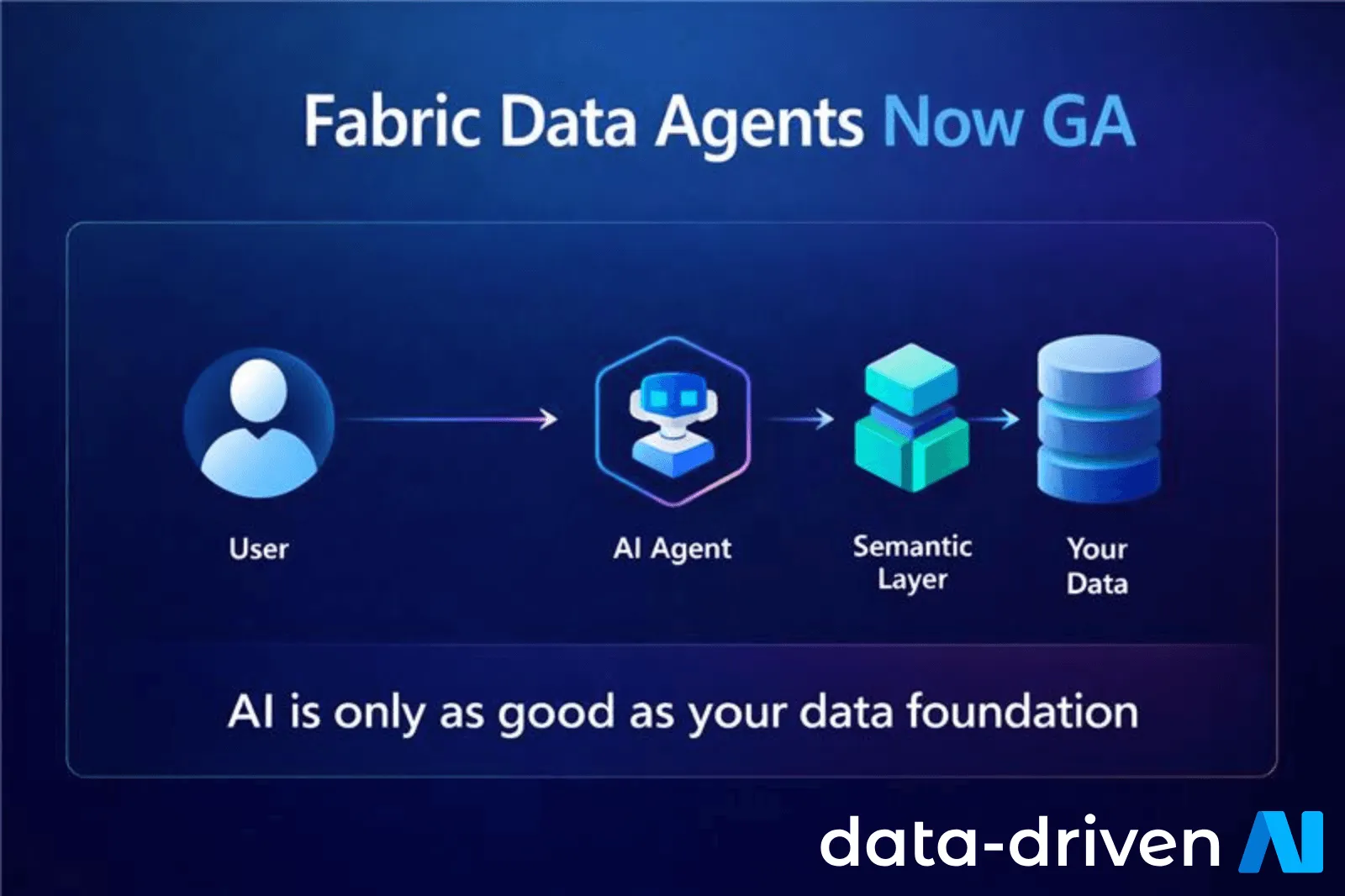
Microsoft Fabric Data Agents: A Production Readiness Guide
Learn how Data Agents use Fabric sources, why semantic models matter, and what to review before a governed rollout.
Microsoft Fabric
Microsoft's Osmos Acquisition and Fabric Data Engineering
What Microsoft's Osmos acquisition could change for Fabric data engineering, OneLake workflows, governance, and platform planning.
Microsoft Fabric
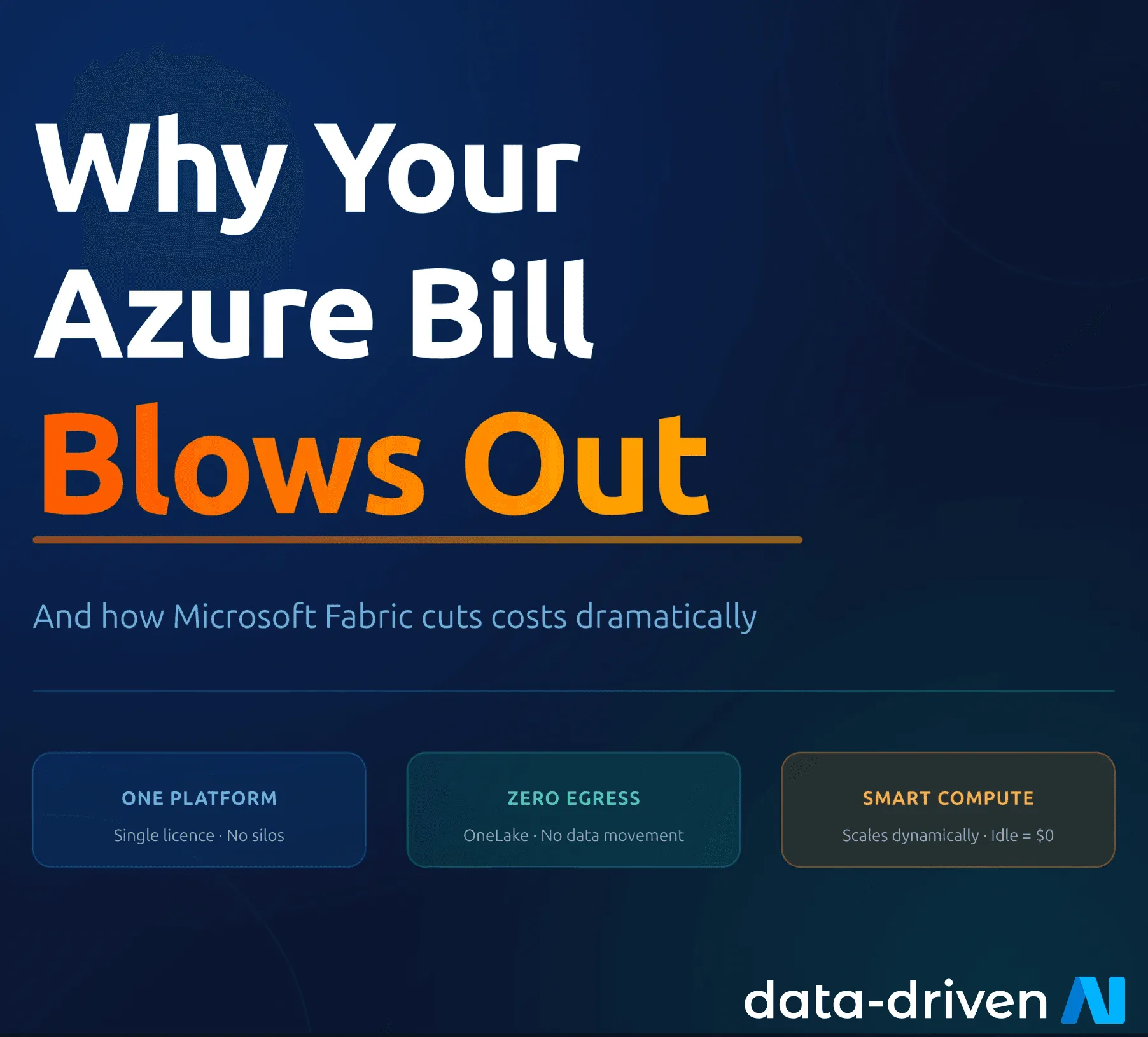
Azure Analytics Costs: Where Microsoft Fabric Fits
Trace analytics costs across compute, licensing, storage, and data movement, then assess where Fabric and FinOps practices may help.
Map the announcements to your Fabric roadmap
Separate available features, previews, dependencies, and operating changes.
'%3e%3cpath%20style='%20stroke:none;fill-rule:nonzero;fill:%230078d4;fill-opacity:1;'%20d='M%20130.835938%200.808594%20L%20246.300781%200.808594%20L%20126.433594%20355.867188%20C%20125.824219%20357.679688%20124.929688%20359.386719%20123.792969%20360.925781%20C%20122.65625%20362.46875%20121.285156%20363.816406%20119.726562%20364.933594%20C%20118.171875%20366.050781%20116.457031%20366.917969%20114.628906%20367.5%20C%20112.804688%20368.085938%20110.902344%20368.386719%20108.992188%20368.386719%20L%2019.128906%20368.386719%20C%2016.214844%20368.386719%2013.335938%20367.695312%2010.742188%20366.359375%20C%208.144531%20365.03125%205.902344%20363.097656%204.199219%20360.726562%20C%202.496094%20358.355469%201.382812%20355.613281%200.949219%20352.730469%20C%200.515625%20349.84375%200.78125%20346.894531%201.710938%20344.132812%20L%20113.386719%2013.320312%20C%20113.996094%2011.507812%20114.890625%209.800781%20116.03125%208.261719%20C%20117.167969%206.722656%20118.542969%205.371094%20120.09375%204.253906%20C%20121.648438%203.140625%20123.367188%202.273438%20125.191406%201.6875%20C%20127.015625%201.101562%20128.917969%200.800781%20130.832031%200.800781%20L%20130.832031%200.804688%20Z%20M%20130.835938%200.808594%20'%3e%3c/path%3e%3c/g%3e%3cg%20clip-rule='nonzero'%20clip-path='url(%23b1ce87f571)'%3e%3cpath%20style='%20stroke:none;fill-rule:nonzero;fill:%2302b2fe;fill-opacity:1;'%20d='M%20485.054688%200.800781%20L%20404.832031%200.800781%20C%20391.472656%200.800781%20380.636719%2011.625%20380.636719%2024.976562%20L%20380.636719%20316.339844%20L%20278.34375%2013.316406%20C%20278.03125%2012.417969%20277.679688%2011.5625%20277.210938%2010.703125%20C%20276.78125%209.84375%20276.273438%209.027344%20275.6875%208.246094%20C%20275.414062%207.855469%20275.101562%207.503906%20274.792969%207.15625%20C%20274.441406%206.765625%20274.128906%206.414062%20273.777344%206.101562%20C%20273.113281%205.402344%20272.410156%204.816406%20271.628906%204.269531%20C%20270.070312%203.140625%20268.351562%202.28125%20266.558594%201.695312%20C%20264.722656%201.113281%20262.8125%200.800781%20260.898438%200.800781%20L%20132.210938%200.800781%20C%20134.121094%200.800781%20136.03125%201.113281%20137.867188%201.695312%20C%20139.660156%202.28125%20141.378906%203.140625%20142.941406%204.269531%20C%20145.671875%206.21875%20147.816406%208.871094%20149.144531%2011.949219%20C%20149.222656%2012.144531%20149.300781%2012.300781%20149.339844%2012.496094%20C%20149.457031%2012.769531%20149.574219%2013.042969%20149.652344%2013.316406%20L%20261.328125%20344.128906%20C%20261.367188%20344.246094%20261.40625%20344.363281%20261.40625%20344.480469%20L%20265.269531%20355.863281%20C%20265.894531%20357.695312%20266.792969%20359.375%20267.921875%20360.933594%20C%20269.054688%20362.453125%20270.421875%20363.816406%20271.980469%20364.949219%20C%20273.542969%20366.039062%20275.257812%20366.898438%20277.054688%20367.484375%20C%20278.886719%20368.066406%20280.800781%20368.378906%20282.710938%20368.378906%20L%20404.660156%20368.378906%20C%20404.71875%20368.378906%20404.773438%20368.386719%20404.832031%20368.386719%20L%20485.054688%20368.386719%20C%20498.417969%20368.386719%20509.25%20357.566406%20509.25%20344.214844%20L%20509.25%2024.976562%20C%20509.25%2011.625%20498.417969%200.800781%20485.054688%200.800781%20Z%20M%20485.054688%200.800781%20'%3e%3c/path%3e%3c/g%3e%3c/g%3e%3c/svg%3e)