Microsoft Fabric · Cost guide
Find what is driving your Azure analytics bill
Trace analytics costs across compute, licensing, storage, and data movement, then assess where Fabric and FinOps practices may help.

A high Azure analytics bill does not identify one cause. It can combine idle or oversized compute, inefficient queries, repeated data copies, storage growth, user licences, and services owned by different teams.
Microsoft Fabric changes some of those cost boundaries. It does not guarantee a saving. The result depends on workload shape, capacity size, storage, user access, reservations, and how the platform is operated.
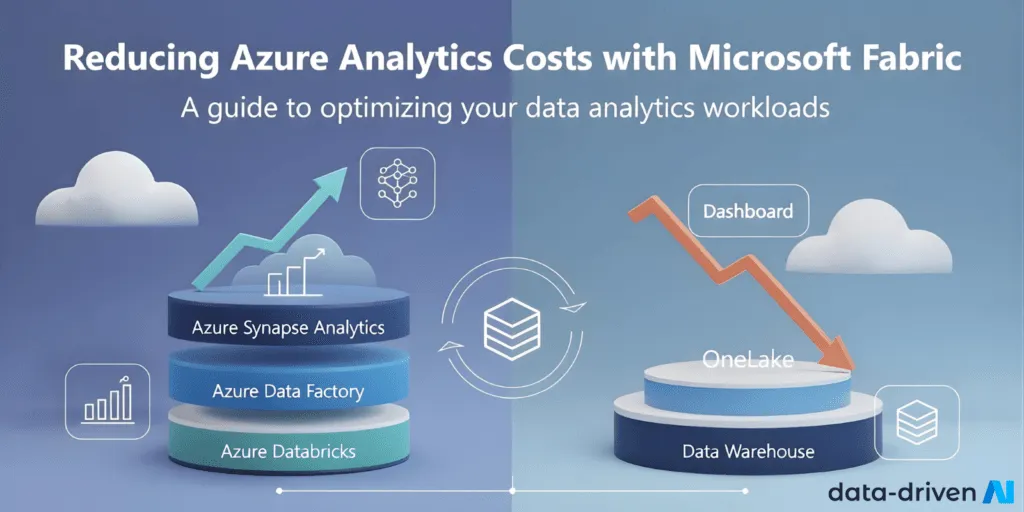
Break the bill into its parts
Compute
List the clusters, capacities, warehouses, pipelines, notebooks, and refreshes that consume compute. Record when they run, who owns them, and the business output they produce.
For Fabric, Capacity Units measure the compute available to a capacity. Workloads share that capacity and can affect each other.
Storage
Measure data stored in each service, duplicate copies, retention, backup, and disaster-recovery storage. In Fabric, OneLake storage has its own consumption and billing rules rather than disappearing into the capacity price.
Licensing
Identify the capacity, per-user, and viewer licences required for the way content is created and shared. Power BI access rules vary by SKU and user role.
Data movement
Map ingestion, copies, exports, shortcuts, and cross-region transfer. A shared storage layer may reduce some copies, but integration and transaction costs still depend on the design.
Understand what Fabric consolidates
Fabric provides data integration, engineering, science, warehousing, real-time, and Power BI experiences within one platform. A capacity can support several workloads, and OneLake provides a common logical data lake.
This can simplify architecture and procurement for some estates. It does not mean every Azure service should be replaced or that one licence covers every user and workload.
Use Microsoft’s current Fabric licensing guide to confirm capacity and user requirements.
Size capacity with observed demand
A capacity estimate should come from representative workloads, not a count of users or terabytes alone. Query complexity, Spark jobs, refreshes, concurrency, and timing all affect consumption.
Microsoft recommends reviewing usage in the Capacity Metrics app and testing a workload before settling on a SKU. Its capacity planning guide explains the current CU model and estimation process.
Check both average demand and short peaks. Fabric smoothing changes how some consumption is accounted against capacity limits; it does not make the underlying work free.
Include OneLake storage explicitly
OneLake storage is billed separately from Fabric compute capacity for many items. Transactions, shortcuts, security operations, paused capacity, and disaster recovery have their own rules.
Review Microsoft’s OneLake consumption documentation against the regions and features in your design.
Assign cost to owners and outcomes
A useful monthly review connects consumption to a workload, owner, and business purpose. It should answer:
- Which items consumed the most capacity?
- Which workload caused throttling or repeated peaks?
- Which storage is active, retained, duplicated, or orphaned?
- Which licences support active use?
- Which failed or repeated jobs created avoidable work?
- Which action will be tested before the next review?
The Fabric Capacity Metrics app helps administrators inspect consumption. Business ownership still has to be supplied by the organisation.
Compare options before migrating
Model at least three choices:
- improve the existing Azure services
- move selected workloads into Fabric
- redesign the platform and operating model
Include migration effort, parallel running, skills, support, data movement, licensing, reservations, and exit cost. Use a representative pilot to test assumptions.
FinOps provides the cadence for this work: engineering, finance, and business owners make cost and value decisions together. Fabric can change the architecture, but operating discipline determines whether the change lasts.
Microsoft Fabric
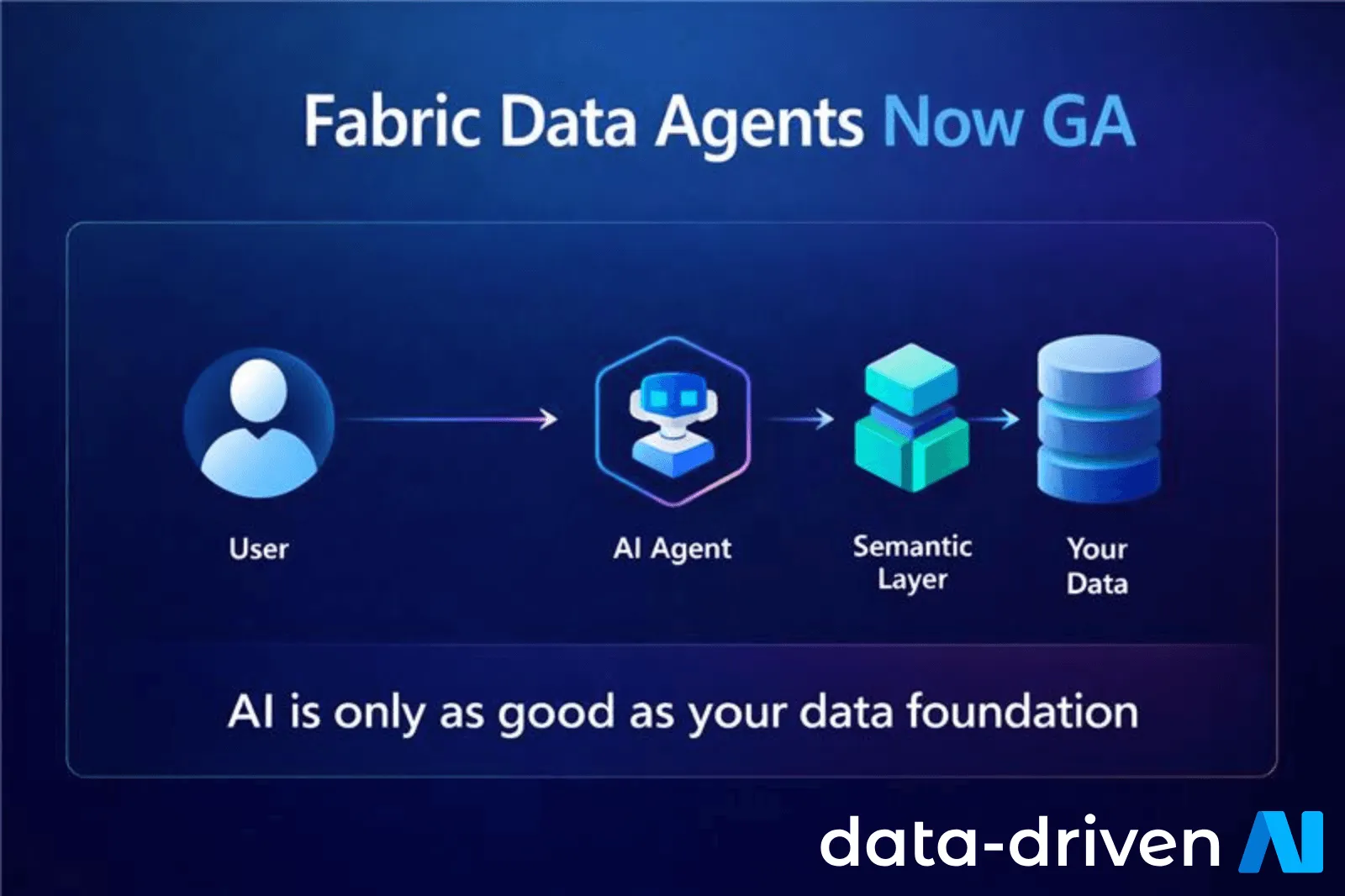
Microsoft Fabric Data Agents: A Production Readiness Guide
Learn how Data Agents use Fabric sources, why semantic models matter, and what to review before a governed rollout.
Microsoft Fabric
Microsoft's Osmos Acquisition and Fabric Data Engineering
What Microsoft's Osmos acquisition could change for Fabric data engineering, OneLake workflows, governance, and platform planning.

Microsoft Fabric
Microsoft Fabric CI/CD: What Official Support Changes
Understand where fabric-cicd fits beside Git integration and deployment pipelines, and what platform teams should verify before adoption.
Turn the bill into an operating decision
Map workloads, capacity use, storage, licences, and owners before choosing a migration or resizing plan.
'%3e%3cpath%20style='%20stroke:none;fill-rule:nonzero;fill:%230078d4;fill-opacity:1;'%20d='M%20130.835938%200.808594%20L%20246.300781%200.808594%20L%20126.433594%20355.867188%20C%20125.824219%20357.679688%20124.929688%20359.386719%20123.792969%20360.925781%20C%20122.65625%20362.46875%20121.285156%20363.816406%20119.726562%20364.933594%20C%20118.171875%20366.050781%20116.457031%20366.917969%20114.628906%20367.5%20C%20112.804688%20368.085938%20110.902344%20368.386719%20108.992188%20368.386719%20L%2019.128906%20368.386719%20C%2016.214844%20368.386719%2013.335938%20367.695312%2010.742188%20366.359375%20C%208.144531%20365.03125%205.902344%20363.097656%204.199219%20360.726562%20C%202.496094%20358.355469%201.382812%20355.613281%200.949219%20352.730469%20C%200.515625%20349.84375%200.78125%20346.894531%201.710938%20344.132812%20L%20113.386719%2013.320312%20C%20113.996094%2011.507812%20114.890625%209.800781%20116.03125%208.261719%20C%20117.167969%206.722656%20118.542969%205.371094%20120.09375%204.253906%20C%20121.648438%203.140625%20123.367188%202.273438%20125.191406%201.6875%20C%20127.015625%201.101562%20128.917969%200.800781%20130.832031%200.800781%20L%20130.832031%200.804688%20Z%20M%20130.835938%200.808594%20'%3e%3c/path%3e%3c/g%3e%3cg%20clip-rule='nonzero'%20clip-path='url(%23b1ce87f571)'%3e%3cpath%20style='%20stroke:none;fill-rule:nonzero;fill:%2302b2fe;fill-opacity:1;'%20d='M%20485.054688%200.800781%20L%20404.832031%200.800781%20C%20391.472656%200.800781%20380.636719%2011.625%20380.636719%2024.976562%20L%20380.636719%20316.339844%20L%20278.34375%2013.316406%20C%20278.03125%2012.417969%20277.679688%2011.5625%20277.210938%2010.703125%20C%20276.78125%209.84375%20276.273438%209.027344%20275.6875%208.246094%20C%20275.414062%207.855469%20275.101562%207.503906%20274.792969%207.15625%20C%20274.441406%206.765625%20274.128906%206.414062%20273.777344%206.101562%20C%20273.113281%205.402344%20272.410156%204.816406%20271.628906%204.269531%20C%20270.070312%203.140625%20268.351562%202.28125%20266.558594%201.695312%20C%20264.722656%201.113281%20262.8125%200.800781%20260.898438%200.800781%20L%20132.210938%200.800781%20C%20134.121094%200.800781%20136.03125%201.113281%20137.867188%201.695312%20C%20139.660156%202.28125%20141.378906%203.140625%20142.941406%204.269531%20C%20145.671875%206.21875%20147.816406%208.871094%20149.144531%2011.949219%20C%20149.222656%2012.144531%20149.300781%2012.300781%20149.339844%2012.496094%20C%20149.457031%2012.769531%20149.574219%2013.042969%20149.652344%2013.316406%20L%20261.328125%20344.128906%20C%20261.367188%20344.246094%20261.40625%20344.363281%20261.40625%20344.480469%20L%20265.269531%20355.863281%20C%20265.894531%20357.695312%20266.792969%20359.375%20267.921875%20360.933594%20C%20269.054688%20362.453125%20270.421875%20363.816406%20271.980469%20364.949219%20C%20273.542969%20366.039062%20275.257812%20366.898438%20277.054688%20367.484375%20C%20278.886719%20368.066406%20280.800781%20368.378906%20282.710938%20368.378906%20L%20404.660156%20368.378906%20C%20404.71875%20368.378906%20404.773438%20368.386719%20404.832031%20368.386719%20L%20485.054688%20368.386719%20C%20498.417969%20368.386719%20509.25%20357.566406%20509.25%20344.214844%20L%20509.25%2024.976562%20C%20509.25%2011.625%20498.417969%200.800781%20485.054688%200.800781%20Z%20M%20485.054688%200.800781%20'%3e%3c/path%3e%3c/g%3e%3c/g%3e%3c/svg%3e)