AI delivery · Data quality guide
Reliable AI starts with fit-for-purpose data
Assess accuracy, completeness, consistency, timeliness, and fitness for purpose before training or deploying an AI system.
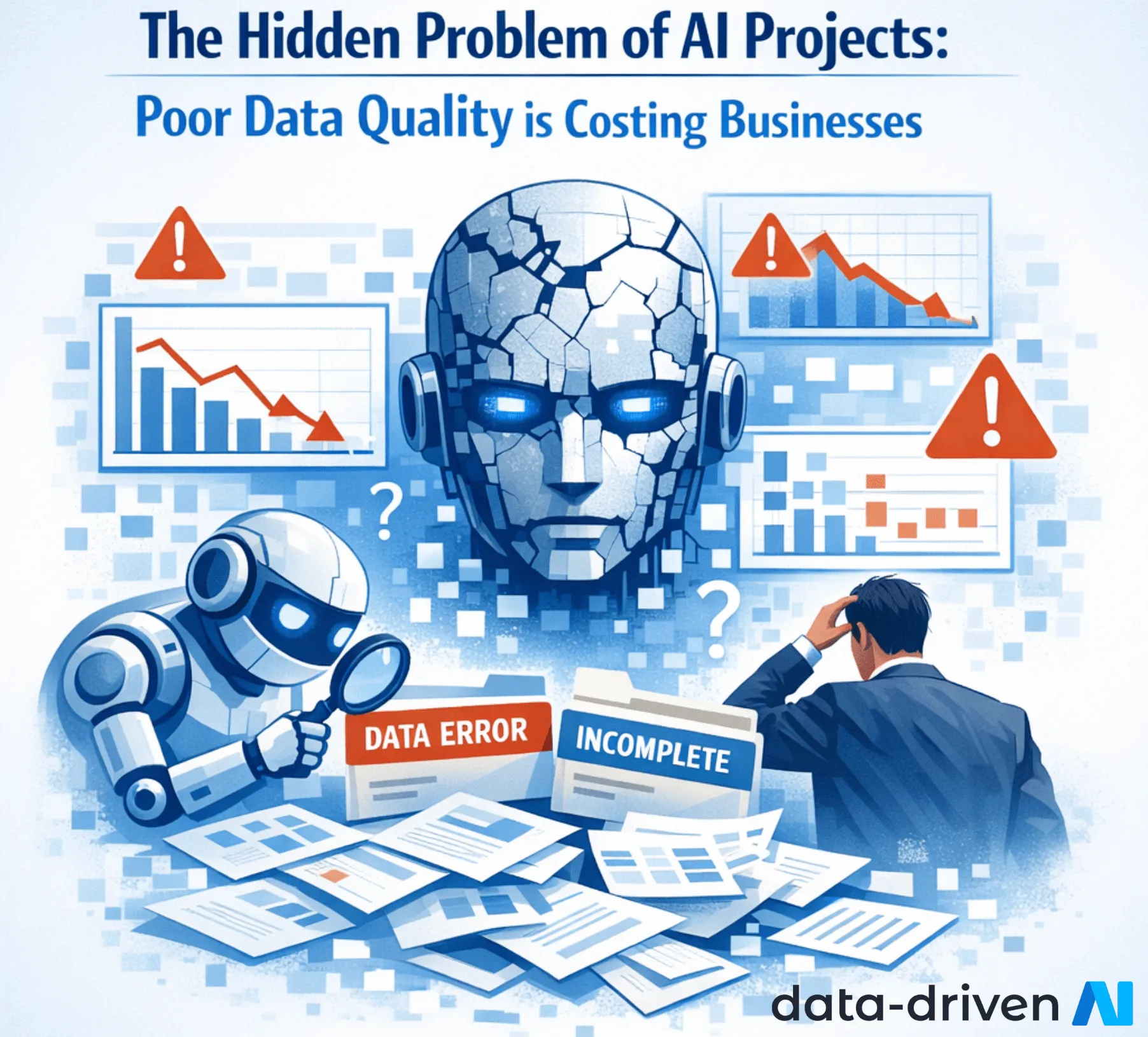
AI data quality is not a score a team can calculate once and carry into every use. It asks whether a defined dataset is suitable for a defined model, decision, audience, and operating environment.
A clean table can still be unrepresentative. A complete record can still be stale. A consistent source can still encode decisions that produce harmful outcomes.
Define quality for the intended use
Begin with the task the AI system supports. Name the decision, affected people, expected input, and consequence of an error.
Then define the dimensions that matter:
- Accuracy: Does the value represent the entity or event closely enough for this task?
- Completeness: Are the fields and populations needed for the task present?
- Consistency: Do systems use the same meaning, units, and identifiers?
- Timeliness: Will the data still be useful when the decision occurs?
- Fitness for purpose: Does the collection method support this use and its affected groups?
The acceptance threshold may differ between a marketing forecast and a high-impact eligibility decision. Record that difference rather than hiding it in one enterprise score.
Find defects before model development
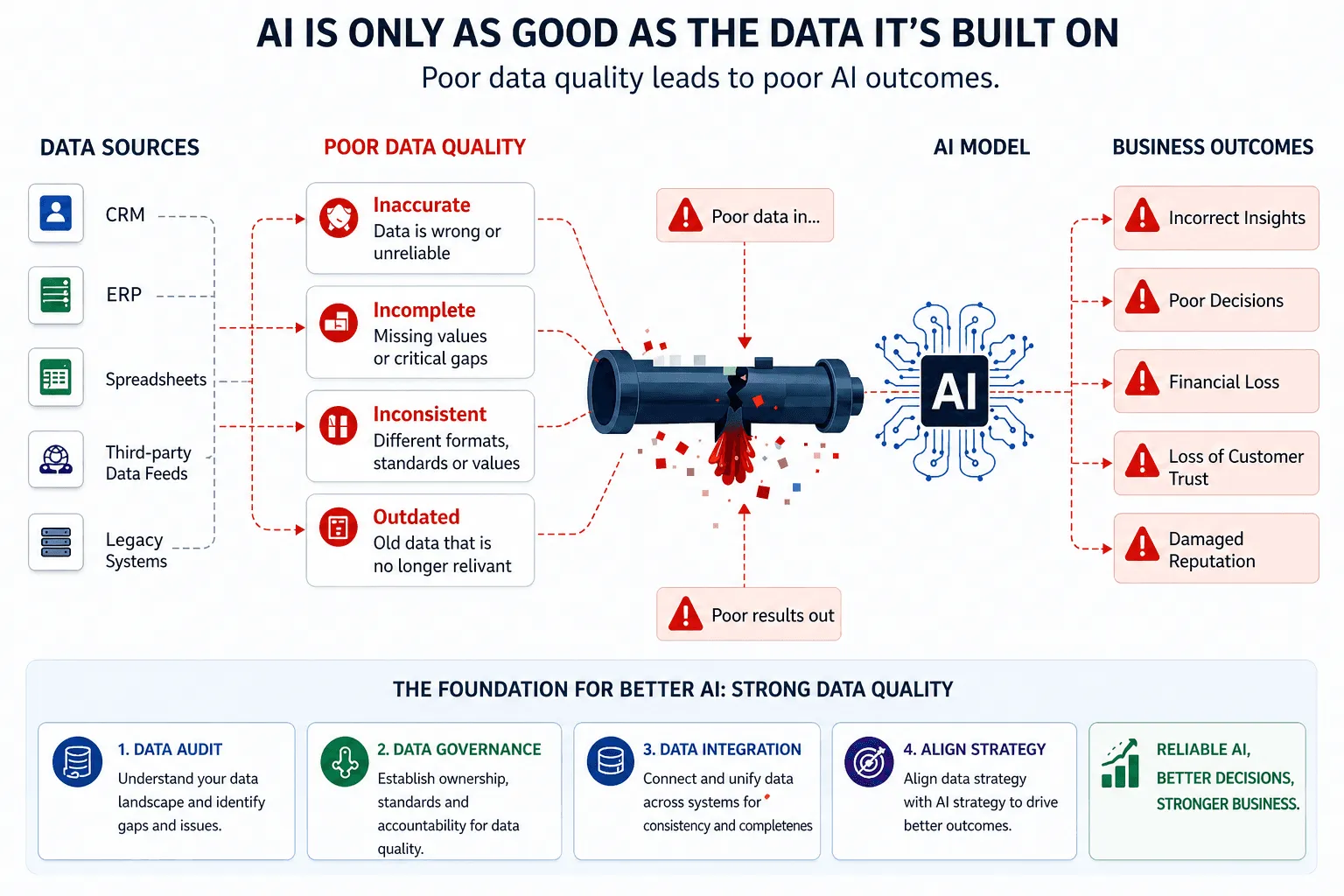
Profile the source data before training or connecting a model. Look for missing values, duplicate entities, invalid categories, unexpected ranges, changed schemas, and populations that are absent or underrepresented.
Do not stop at the table. Trace where each critical field comes from, who changes it, and which transformation may alter its meaning.
A useful data audit records:
- the source and owner
- the business definition
- allowed and invalid values
- freshness requirement
- known gaps and affected groups
- correction and escalation path
Make ownership operational
A governance framework should connect a data rule to a person who can resolve a failure. “The data team owns quality” is too broad.
Assign owners for the source, business meaning, pipeline, model input, and AI outcome. They may be different people. Define who decides whether a defect blocks a release and who accepts a documented limitation.
The NIST AI Risk Management Framework treats data and system risks as work that teams govern, map, measure, and manage throughout the lifecycle.
Test the integration layer
Many AI defects appear when data crosses systems. A pipeline can change types, drop records, duplicate events, or combine values with different meanings.
Add tests at boundaries:
- schema and contract checks at ingestion
- reconciliation between source and destination
- freshness and volume thresholds
- referential-integrity checks
- quarantine for invalid records
- alerts tied to a named owner
A lakehouse, warehouse, or integration platform can host these controls. The platform does not decide which rule is correct for the business.
Align data and AI release gates
Data readiness and model readiness should meet at one release decision. Include the data version, profiling result, known limitations, evaluation set, model version, and approval owner.
If the source or transformation changes, decide which checks must run again. A model that passed last month may no longer meet its threshold after a new product, region, or customer group enters the data.
Monitor quality through the outcome
Production monitoring should cover the source, pipeline, model input, and business result. Watch for changes in missing values, distributions, categories, errors, overrides, and affected groups.
When a metric moves, investigate the source before assuming the model alone is responsible.
Reliable AI comes from visible assumptions and repeatable evidence. The data does not have to be perfect. It must be understood, owned, and tested for the work it is being asked to support.
Microsoft Fabric
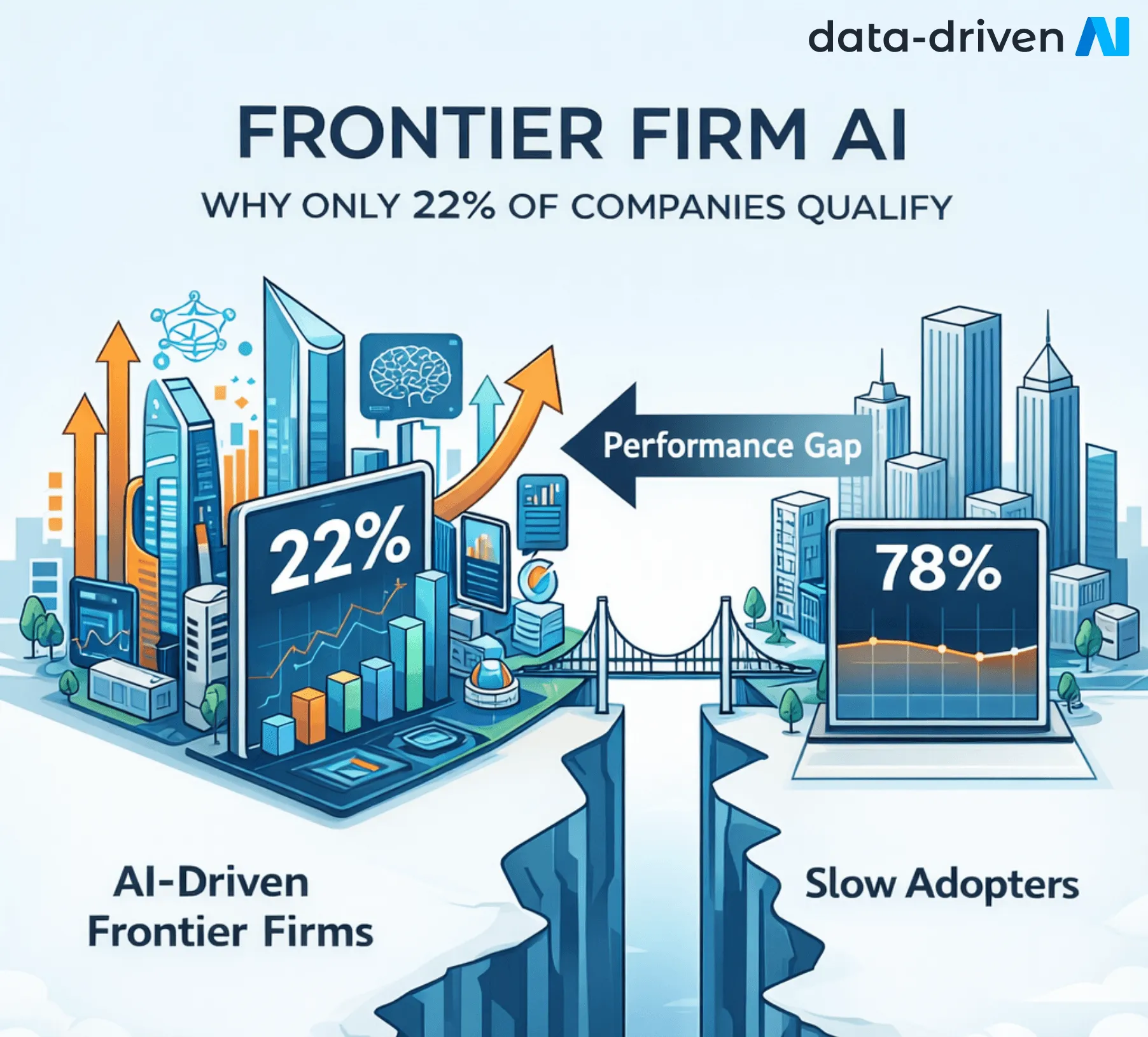
Frontier Firms: Microsoft's AI Operating Model
A sourced explanation of Microsoft's Frontier Firm concept, the research behind it, and practical questions for enterprise AI operating models.

Microsoft Fabric
Agentic DNA: Data-Driven's Framework for AI Agents
Use Data-Driven's Agentic DNA framework to connect an AI agent's outcome, context, action boundary, and operating controls.
Microsoft Fabric
Microsoft Fabric Data Agents: A Production Readiness Guide
Learn how Data Agents use Fabric sources, why semantic models matter, and what to review before a governed rollout.
Make data readiness part of the AI decision
Map the source, owners, quality rules, and acceptance evidence before model work expands.
'%3e%3cpath%20style='%20stroke:none;fill-rule:nonzero;fill:%230078d4;fill-opacity:1;'%20d='M%20130.835938%200.808594%20L%20246.300781%200.808594%20L%20126.433594%20355.867188%20C%20125.824219%20357.679688%20124.929688%20359.386719%20123.792969%20360.925781%20C%20122.65625%20362.46875%20121.285156%20363.816406%20119.726562%20364.933594%20C%20118.171875%20366.050781%20116.457031%20366.917969%20114.628906%20367.5%20C%20112.804688%20368.085938%20110.902344%20368.386719%20108.992188%20368.386719%20L%2019.128906%20368.386719%20C%2016.214844%20368.386719%2013.335938%20367.695312%2010.742188%20366.359375%20C%208.144531%20365.03125%205.902344%20363.097656%204.199219%20360.726562%20C%202.496094%20358.355469%201.382812%20355.613281%200.949219%20352.730469%20C%200.515625%20349.84375%200.78125%20346.894531%201.710938%20344.132812%20L%20113.386719%2013.320312%20C%20113.996094%2011.507812%20114.890625%209.800781%20116.03125%208.261719%20C%20117.167969%206.722656%20118.542969%205.371094%20120.09375%204.253906%20C%20121.648438%203.140625%20123.367188%202.273438%20125.191406%201.6875%20C%20127.015625%201.101562%20128.917969%200.800781%20130.832031%200.800781%20L%20130.832031%200.804688%20Z%20M%20130.835938%200.808594%20'%3e%3c/path%3e%3c/g%3e%3cg%20clip-rule='nonzero'%20clip-path='url(%23b1ce87f571)'%3e%3cpath%20style='%20stroke:none;fill-rule:nonzero;fill:%2302b2fe;fill-opacity:1;'%20d='M%20485.054688%200.800781%20L%20404.832031%200.800781%20C%20391.472656%200.800781%20380.636719%2011.625%20380.636719%2024.976562%20L%20380.636719%20316.339844%20L%20278.34375%2013.316406%20C%20278.03125%2012.417969%20277.679688%2011.5625%20277.210938%2010.703125%20C%20276.78125%209.84375%20276.273438%209.027344%20275.6875%208.246094%20C%20275.414062%207.855469%20275.101562%207.503906%20274.792969%207.15625%20C%20274.441406%206.765625%20274.128906%206.414062%20273.777344%206.101562%20C%20273.113281%205.402344%20272.410156%204.816406%20271.628906%204.269531%20C%20270.070312%203.140625%20268.351562%202.28125%20266.558594%201.695312%20C%20264.722656%201.113281%20262.8125%200.800781%20260.898438%200.800781%20L%20132.210938%200.800781%20C%20134.121094%200.800781%20136.03125%201.113281%20137.867188%201.695312%20C%20139.660156%202.28125%20141.378906%203.140625%20142.941406%204.269531%20C%20145.671875%206.21875%20147.816406%208.871094%20149.144531%2011.949219%20C%20149.222656%2012.144531%20149.300781%2012.300781%20149.339844%2012.496094%20C%20149.457031%2012.769531%20149.574219%2013.042969%20149.652344%2013.316406%20L%20261.328125%20344.128906%20C%20261.367188%20344.246094%20261.40625%20344.363281%20261.40625%20344.480469%20L%20265.269531%20355.863281%20C%20265.894531%20357.695312%20266.792969%20359.375%20267.921875%20360.933594%20C%20269.054688%20362.453125%20270.421875%20363.816406%20271.980469%20364.949219%20C%20273.542969%20366.039062%20275.257812%20366.898438%20277.054688%20367.484375%20C%20278.886719%20368.066406%20280.800781%20368.378906%20282.710938%20368.378906%20L%20404.660156%20368.378906%20C%20404.71875%20368.378906%20404.773438%20368.386719%20404.832031%20368.386719%20L%20485.054688%20368.386719%20C%20498.417969%20368.386719%20509.25%20357.566406%20509.25%20344.214844%20L%20509.25%2024.976562%20C%20509.25%2011.625%20498.417969%200.800781%20485.054688%200.800781%20Z%20M%20485.054688%200.800781%20'%3e%3c/path%3e%3c/g%3e%3c/g%3e%3c/svg%3e)