Azure Functions · Hosting guide
Choose the right Azure Functions plan
Compare Azure Functions hosting options, scaling behaviour, execution limits, cold starts, billing considerations, and common workloads.
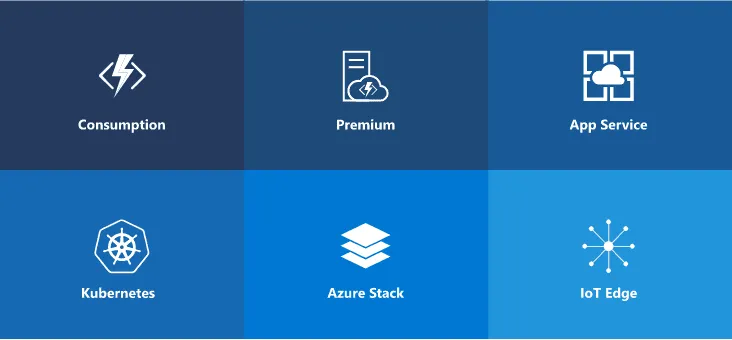
An Azure Functions hosting plan determines how an app scales and how compute is billed. It also affects network features, runtime options, and execution limits.
The available plans have changed since this article first appeared in 2021. Microsoft now identifies Flex Consumption as the serverless plan for new function apps, while the earlier Consumption plan is a legacy option.
Compare the current hosting options
Flex Consumption
Flex Consumption supports event-driven scaling, selectable memory sizes, virtual-network integration, and optional always-ready instances.
Consider it for variable workloads that should scale toward zero but still need current serverless networking and scaling features. Always-ready instances change the cold-start and cost profile, so test the chosen configuration.
Premium
Premium uses prewarmed workers and supports features needed by workloads that cannot tolerate a cold start or require broader networking and compute choices.
It can suit sustained or bursty applications with stricter latency requirements. Billing continues for allocated baseline instances, so include that baseline in the cost model.
Dedicated App Service plan
A Dedicated plan runs functions on allocated App Service compute. It can share a plan with other apps and offers predictable resources, but the team pays for the plan while it is allocated.
Use it when existing App Service capacity, manual scaling, or a dedicated operating model matters more than scale-to-zero behaviour.
Azure Container Apps
Container Apps can host code that uses the Azure Functions programming model in a managed container environment.
It fits teams that need control of the container image, custom libraries, or placement beside other containerised services without operating Kubernetes directly.
Consumption
The original Consumption plan remains relevant to some existing Windows function apps. Microsoft classifies it as a legacy hosting plan and directs new serverless apps toward Flex Consumption.
Do not treat its historical free grant, limits, or timeout values as current without checking the pricing and hosting documentation.
Match the plan to the workload
Ask these questions before choosing:
- Which triggers and languages does the app use?
- How quickly must the first request respond after an idle period?
- Does the app need private network access?
- What memory, CPU, and execution duration does each event need?
- Is demand steady, intermittent, or sharply bursty?
- Does the team need a custom container?
- Which dependencies must be available in every region?
- What monitoring and recovery does the operation require?
A plan comparison without the workload shape usually produces a pricing guess rather than an architecture decision.
Include the surrounding resources
A function app normally depends on storage, monitoring, network, identity, and downstream services. Those resources have their own costs and limits.
Model Application Insights ingestion and retention, storage transactions, outbound data, private networking, always-ready instances, and dependent services alongside function execution.
Test scale and failure behaviour
Load tests should include realistic concurrency, message size, dependency latency, and retry behaviour. Confirm what happens when the downstream service throttles or the function exceeds its time boundary.
For queue or event processing, make operations idempotent so a retry does not create a duplicate business action.
Use the maintained comparison
Microsoft’s Azure Functions hosting options page compares current availability, operating systems, container support, timeouts, networking, scale, and billing.
Use that source with current Azure Functions pricing for the target region. Then validate the chosen plan with a representative deployment rather than relying on a generic plan label.
Azure
Low-Code Developer Productivity with Power Platform
See where low-code can reduce repetitive work, speed delivery, and support governance, plus the evidence to check before using benchmark figures.

Azure
How AI Changes Business Operations and Decisions
See common AI use cases across decisions, automation, customer service, operations, and products, with questions to test value.

Azure
Azure Integrated Stack: A Workload Planning Guide
Map Azure infrastructure, data, AI, DevOps, IoT, and virtual desktop services to a defined workload and operating model.
Turn the article into a practical next step
Bring the use case, constraints, and current platform. We can help you identify what to test or decide next.
'%3e%3cpath%20style='%20stroke:none;fill-rule:nonzero;fill:%230078d4;fill-opacity:1;'%20d='M%20130.835938%200.808594%20L%20246.300781%200.808594%20L%20126.433594%20355.867188%20C%20125.824219%20357.679688%20124.929688%20359.386719%20123.792969%20360.925781%20C%20122.65625%20362.46875%20121.285156%20363.816406%20119.726562%20364.933594%20C%20118.171875%20366.050781%20116.457031%20366.917969%20114.628906%20367.5%20C%20112.804688%20368.085938%20110.902344%20368.386719%20108.992188%20368.386719%20L%2019.128906%20368.386719%20C%2016.214844%20368.386719%2013.335938%20367.695312%2010.742188%20366.359375%20C%208.144531%20365.03125%205.902344%20363.097656%204.199219%20360.726562%20C%202.496094%20358.355469%201.382812%20355.613281%200.949219%20352.730469%20C%200.515625%20349.84375%200.78125%20346.894531%201.710938%20344.132812%20L%20113.386719%2013.320312%20C%20113.996094%2011.507812%20114.890625%209.800781%20116.03125%208.261719%20C%20117.167969%206.722656%20118.542969%205.371094%20120.09375%204.253906%20C%20121.648438%203.140625%20123.367188%202.273438%20125.191406%201.6875%20C%20127.015625%201.101562%20128.917969%200.800781%20130.832031%200.800781%20L%20130.832031%200.804688%20Z%20M%20130.835938%200.808594%20'%3e%3c/path%3e%3c/g%3e%3cg%20clip-rule='nonzero'%20clip-path='url(%23b1ce87f571)'%3e%3cpath%20style='%20stroke:none;fill-rule:nonzero;fill:%2302b2fe;fill-opacity:1;'%20d='M%20485.054688%200.800781%20L%20404.832031%200.800781%20C%20391.472656%200.800781%20380.636719%2011.625%20380.636719%2024.976562%20L%20380.636719%20316.339844%20L%20278.34375%2013.316406%20C%20278.03125%2012.417969%20277.679688%2011.5625%20277.210938%2010.703125%20C%20276.78125%209.84375%20276.273438%209.027344%20275.6875%208.246094%20C%20275.414062%207.855469%20275.101562%207.503906%20274.792969%207.15625%20C%20274.441406%206.765625%20274.128906%206.414062%20273.777344%206.101562%20C%20273.113281%205.402344%20272.410156%204.816406%20271.628906%204.269531%20C%20270.070312%203.140625%20268.351562%202.28125%20266.558594%201.695312%20C%20264.722656%201.113281%20262.8125%200.800781%20260.898438%200.800781%20L%20132.210938%200.800781%20C%20134.121094%200.800781%20136.03125%201.113281%20137.867188%201.695312%20C%20139.660156%202.28125%20141.378906%203.140625%20142.941406%204.269531%20C%20145.671875%206.21875%20147.816406%208.871094%20149.144531%2011.949219%20C%20149.222656%2012.144531%20149.300781%2012.300781%20149.339844%2012.496094%20C%20149.457031%2012.769531%20149.574219%2013.042969%20149.652344%2013.316406%20L%20261.328125%20344.128906%20C%20261.367188%20344.246094%20261.40625%20344.363281%20261.40625%20344.480469%20L%20265.269531%20355.863281%20C%20265.894531%20357.695312%20266.792969%20359.375%20267.921875%20360.933594%20C%20269.054688%20362.453125%20270.421875%20363.816406%20271.980469%20364.949219%20C%20273.542969%20366.039062%20275.257812%20366.898438%20277.054688%20367.484375%20C%20278.886719%20368.066406%20280.800781%20368.378906%20282.710938%20368.378906%20L%20404.660156%20368.378906%20C%20404.71875%20368.378906%20404.773438%20368.386719%20404.832031%20368.386719%20L%20485.054688%20368.386719%20C%20498.417969%20368.386719%20509.25%20357.566406%20509.25%20344.214844%20L%20509.25%2024.976562%20C%20509.25%2011.625%20498.417969%200.800781%20485.054688%200.800781%20Z%20M%20485.054688%200.800781%20'%3e%3c/path%3e%3c/g%3e%3c/g%3e%3c/svg%3e)